
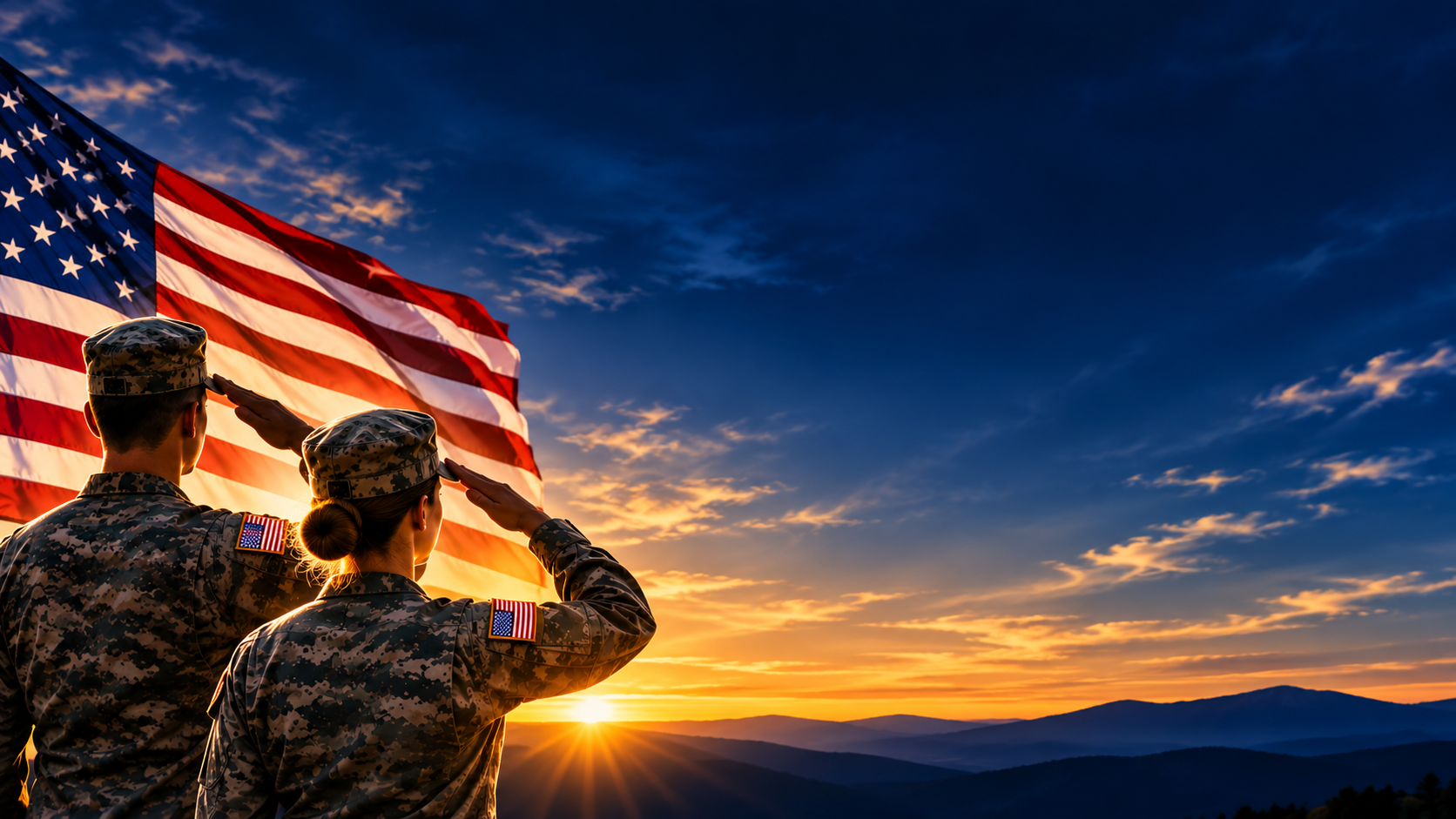
Your Service. Our Gratitude.
VETERANS DAY 2026
Today, and every day, we honor the men and women who have served our nation with courage, commitment, and distinction.
Six Branches. One Nation. A Legacy of Service.
From the founding of the Continental Army in 1775 to the establishment of the U.S. Space Force in 2019, generations of Americans have answered the call to serve. Each branch carries its own history, traditions, and specialized missions—united by a commitment to our country.

A LEGACY OF SERVICE TO THE NATION
KEY MILESTONES IN ARMY HISTORY

United States Army
Established on June 14, 1775, the United States Army has served as a cornerstone of America's national defense for more than 250 years. As the nation's principal land-based military force, the Army has evolved from its Revolutionary War beginnings into a highly trained, technologically advanced organization capable of conducting missions around the world.
Throughout its history, the Army has played a vital role in defending American interests, protecting national security, responding to emergencies, and supporting military operations alongside other branches of the Armed Forces. Its legacy reflects generations of soldiers whose courage, discipline, and commitment to service have helped shape our nation's history.
Core Mission | The United States Army exists to defend the nation by maintaining forces prepared to respond whenever and wherever duty calls. Its responsibilities extend from protecting American interests and conducting sustained ground operations to supporting allied nations and responding to emerging threats.




A LEGACY OF AIRPOWER, GLOBAL REACH, AND SERVICE
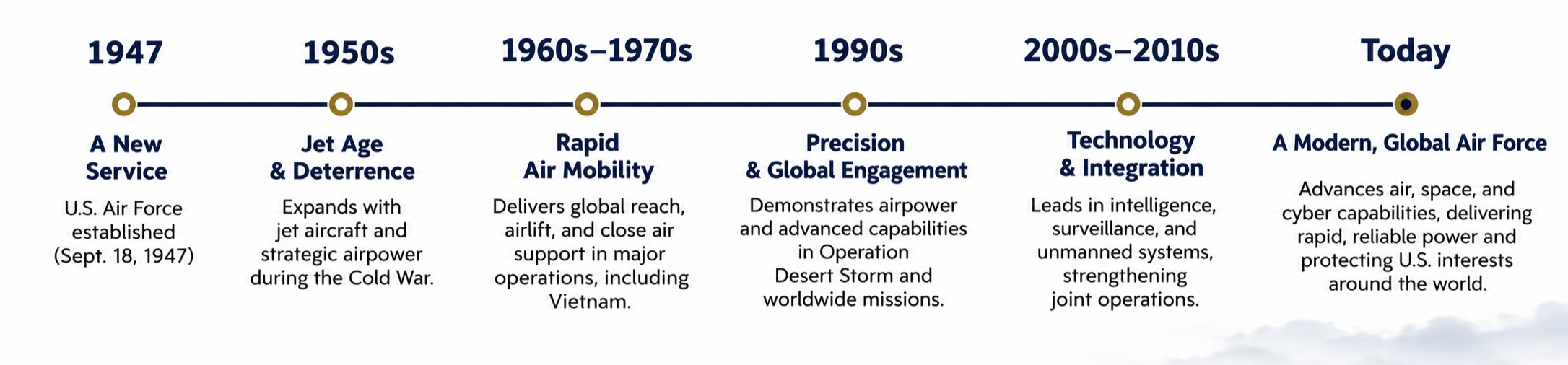
KEY MILESTONES IN AIR FORCE HISTORY
United States Air Force
Established on September 18, 1947, the United States Air Force has become a vital force in protecting America's national security and maintaining its ability to respond to threats around the world. Originally developed from the aviation capabilities of the United States Army, the Air Force emerged as an independent military branch following World War II, reflecting the growing importance of airpower in modern warfare.
Throughout its history, the Air Force has played a defining role in defending American airspace, supporting military operations, transporting personnel and supplies, and providing critical intelligence and reconnaissance capabilities. From the early days of military aviation to today's advanced aircraft, unmanned systems, and sophisticated defense technologies, generations of Airmen have demonstrated extraordinary skill, courage, and dedication to service.
The United States Air Force is responsible for protecting the nation through airpower, maintaining the ability to respond rapidly to threats, support military operations, and project American strength wherever needed. Its capabilities include air superiority, global strike, rapid mobility, intelligence gathering, surveillance, reconnaissance, and command and control.

A LEGACY OF SERVICE AT SEA
KEY MILESTONES IN THE HISTORY OF THE UNITED STATES NAVY

United States Navy
Established on October 13, 1775, the United States Navy has played a vital role in protecting America's maritime interests and defending the nation for more than 250 years. Originating with the Continental Navy during the American Revolution, the Navy has evolved into one of the world's most capable maritime forces, operating across the world's oceans and maintaining a strong presence wherever American interests and national security require protection.
Throughout its history, the Navy has been instrumental in safeguarding international waterways, supporting military operations, protecting maritime commerce, and responding to humanitarian emergencies. From the earliest American warships to today's advanced aircraft carriers, submarines, destroyers, and naval aviation, generations of Sailors have demonstrated exceptional courage, professionalism, and dedication to duty.
The Navy's legacy reflects a proud tradition of service, sacrifice, and innovation, honoring the men and women who have answered the call to protect our nation both at sea and around the world.
The United States Navy is responsible for defending American interests through maritime operations, maintaining freedom of navigation, deterring potential threats, and providing the nation with the ability to project military power across the world's oceans. Its responsibilities include maritime security, sea control, strategic deterrence, naval aviation, undersea warfare, and support for joint military operations.

A LEGACY OF EXPEDITIONARY SERVICE
KEY MILESTONES IN MARINE CORPS HISTORY
United States Marine Corps
Established on November 10, 1775, the United States Marine Corps has built a distinguished legacy of courage, discipline, and unwavering commitment to defending the nation. Founded as the Continental Marines during the American Revolution, the Marine Corps has evolved into an elite expeditionary fighting force known for its ability to respond rapidly to crises and operate in some of the world's most challenging environments.
Throughout its history, the Marine Corps has played a defining role in America's military operations, from early naval expeditions and amphibious assaults to major conflicts and humanitarian missions around the world. Working closely with the United States Navy while maintaining its own distinct traditions and capabilities, Marines are trained to operate across land, sea, and air in support of national defense objectives.
From the battlefields of World War I and the Pacific campaigns of World War II to modern expeditionary operations, generations of Marines have demonstrated extraordinary determination, resilience, and dedication to service. Their enduring traditions of honor, courage, and commitment reflect a proud heritage of sacrifice and loyalty to one another and to the nation.
The United States Marine Corps is responsible for maintaining highly trained, rapidly deployable forces capable of responding to emergencies, conducting expeditionary operations, and supporting military missions wherever American interests require protection. Its responsibilities include amphibious warfare, expeditionary combat operations, crisis response, maritime security support, and participation in joint military operations.
Guided by its enduring motto, Semper Fidelis (Always Faithful), the Marine Corps' mission are combat readiness, expeditionary excellence, adaptability, and leadership development. Through rigorous training, continuous modernization, and an unwavering commitment to its Marines, the Corps remains prepared to respond to emerging threats, operate alongside other military branches, and defend American interests at home and abroad.


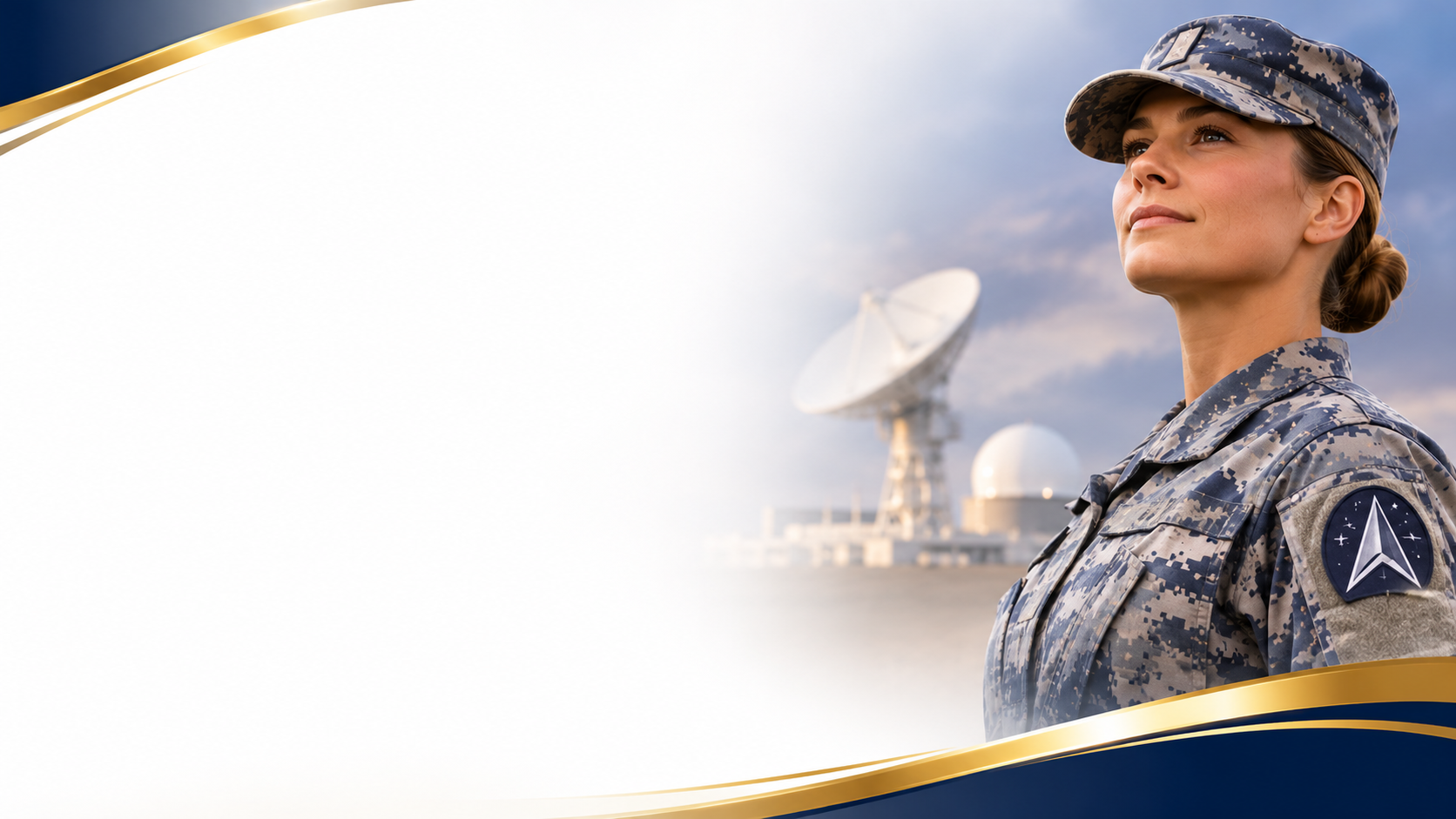
U.S. SPACE FORCE
A BRIEF HISTORY | FROM ESTABLISHMENT TODAY
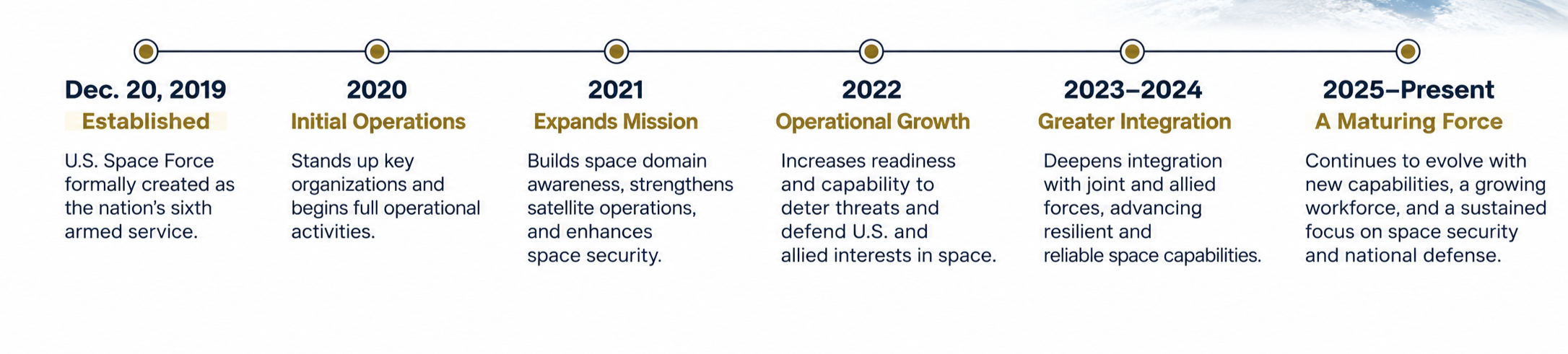
United States Space Force
Established on December 20, 2019, the United States Space Force is the nation's newest branch of the Armed Forces, created to protect America's interests in space and strengthen national security in an increasingly complex technological environment. Formed as an independent military service within the Department of the Air Force, the Space Force represents an important milestone in the evolution of American defense, recognizing the essential role that space-based systems play in military operations, national security, and everyday life.
Although the Space Force is the youngest military branch, its origins extend back decades through the space operations, satellite programs, and technological advancements pioneered by the United States Air Force and other defense organizations. Today, the Space Force builds upon that foundation, bringing specialized personnel, advanced technologies, and dedicated resources together to protect the nation's access to and freedom to operate in space.
Throughout its development, the Space Force has assumed responsibility for critical capabilities that support military operations around the world. From satellite communications and missile warning systems to global positioning, intelligence support, and monitoring activity in orbit, its Guardians help maintain the systems upon which America's military forces, government agencies, and civilian infrastructure increasingly depend.
The Space Force's growing legacy reflects a new generation of military professionals whose innovation, technical expertise, vigilance, and dedication to service are helping shape the future of national defense.
The United States Space Force is responsible for securing America's interests in, from, and to space by organizing, training, and equipping military forces capable of protecting vital space systems and supporting joint military operations. Its responsibilities include space domain awareness, satellite operations, missile warning and tracking, orbital warfare, space-based communications, and protecting U.S. and allied access to essential space capabilities.
As space becomes increasingly important to national security, the Space Force works alongside other military branches and allied nations to identify emerging threats, strengthen the resilience of critical systems, and maintain the nation's ability to operate effectively in an increasingly contested space environment.
Guided by its motto, Semper Supra (Always Above), the Space Force's mission is space superiority, technological innovation, operational readiness, and leadership development. Through advanced training, continuous modernization, and a commitment to its Guardians, the Space Force is building the capabilities needed to protect American interests while preparing for the challenges of tomorrow.
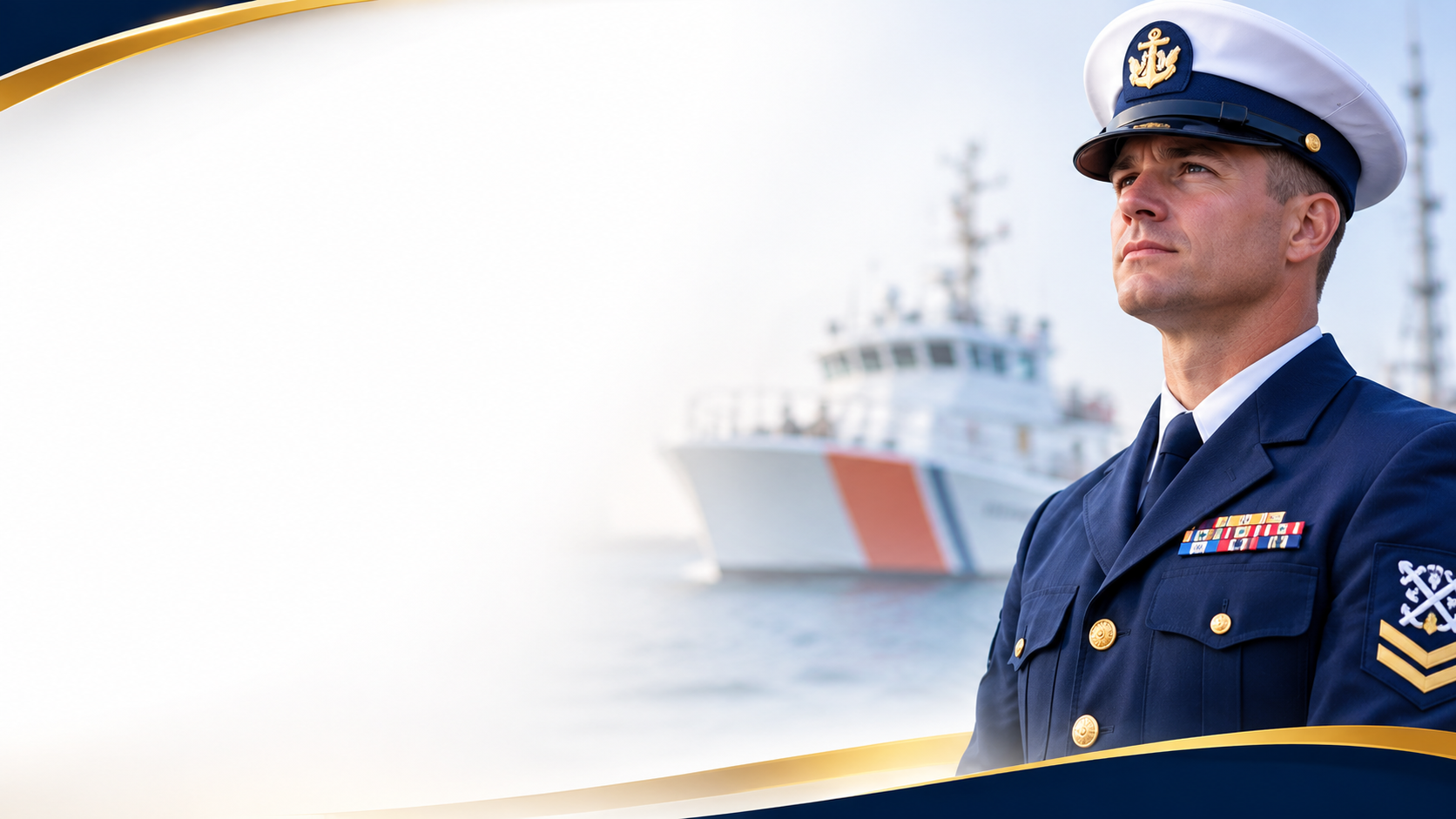
A LEGACY OF PROTECTING OUR NATIONS WATERWAYS, SAVING LIVES, SERVING THE AMERICAN PEOPLE
KEY MILESTONES IN U.S. COAST GUARD HISTORY
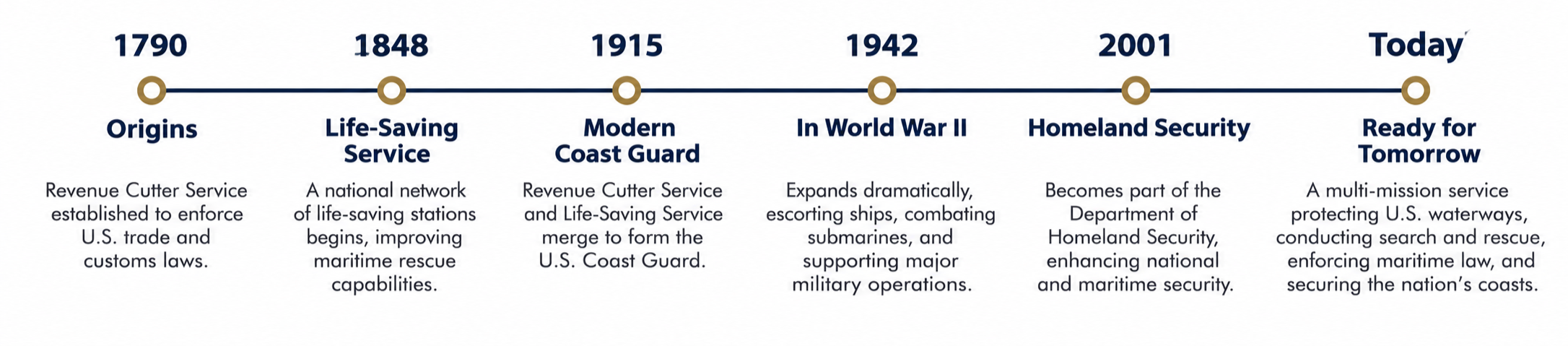

United States Coast Guard
Established on August 4, 1790, the United States Coast Guard has built a remarkable legacy of service dedicated to protecting America's waterways, safeguarding lives, and defending the nation's maritime interests. Originating as the Revenue Marine, later known as the Revenue Cutter Service, the Coast Guard evolved into a unique branch of the United States Armed Forces, combining military readiness with maritime law enforcement, search and rescue, and homeland security responsibilities.
Throughout its history, the Coast Guard has played an essential role in protecting American coastlines, enforcing maritime laws, supporting national defense, and responding to emergencies both at home and abroad. From its earliest missions protecting maritime commerce to modern operations involving coastal security, disaster response, environmental protection, and international maritime cooperation, generations of Coast Guard personnel have demonstrated extraordinary courage, professionalism, and dedication to duty.
The Coast Guard's legacy is especially distinguished by its lifesaving mission. Whether rescuing mariners in dangerous seas, responding to hurricanes and natural disasters, or supporting military operations during times of conflict, its members have consistently answered the call to serve. Their commitment reflects a proud tradition of honor, respect, and devotion to duty, often placing themselves in harm's way to protect others.
The United States Coast Guard is responsible for protecting the nation's maritime interests, ensuring the safety and security of its waterways, and maintaining forces prepared to respond to emergencies and national security threats. Its responsibilities include maritime search and rescue, law enforcement, port and coastal security, environmental protection, navigation safety, and support for national defense operations.
Unlike the other military branches, the Coast Guard operates primarily under the Department of Homeland Security during peacetime, while remaining an armed service capable of operating as part of the Department of the Navy when directed by the President or Congress.
Guided by its enduring motto, Semper Paratus (Always Ready), the Coast Guard continues a mission of maritime readiness, lifesaving service, operational excellence, and leadership development. Through rigorous training, specialized capabilities, continuous modernization, and an unwavering commitment to its personnel, the Coast Guard remains prepared to protect American lives, defend maritime interests, and respond wherever its services are needed.
Reserve Officers' Training Corps (ROTC)
The Reserve Officers' Training Corps (ROTC) has helped develop generations of American military leaders since its formal establishment in 1916. Through college-based education, military training, and leadership development, ROTC prepares students to become commissioned officers in the United States Armed Forces.
ROTC programs combine academic achievement with military discipline, physical readiness, and a commitment to service. Graduates have gone on to serve with distinction in active-duty, National Guard, and Reserve components, contributing to America's military strength and leadership.

United States Military Reserve
The United States Military Reserve has a proud tradition of service, providing trained and dedicated personnel who stand ready to support the nation's defense whenever called upon. Serving across the Army, Navy, Marine Corps, Air Force, and Coast Guard Reserve components, Reservists balance civilian careers, families, and community responsibilities with their commitment to military service.
Throughout American history, Reserve forces have played a vital role in national defense, supporting military operations, responding to emergencies, and strengthening America's readiness at home and abroad. Their contributions reflect extraordinary dedication, flexibility, and a willingness to answer the call to duty.

Military Service Recognition & Disclaimer
Federal Solutions Support, LLC, proudly honors the service and sacrifice of America's military veterans. This page is provided for educational and commemorative purposes. Federal Solutions is an independent organization and is not affiliated with, sponsored by, endorsed by, or officially connected to the U.S. Department of Defense, Department of Veterans Affairs, or any branch of the United States Armed Forces.
Military branch names are used for historical and educational identification. Illustrations are symbolic and do not represent official military seals or insignia.
At Federal Solutions, our commitment to military service members and veterans extends beyond the work we do every day. We are proud to support organizations that serve America's heroes, including the Tunnel to Towers Foundation and the Wounded Warrior Project, through ongoing monthly charitable contributions. While these organizations are not affiliated with or endorsing Federal Solutions, we are honored to help support their missions.