


USPS Employee Retirement
& Benefits Resource Center
Postal employees face unique retirement and benefit decisions involving FERS, CSRS, TSP, PSHB, FEGLI, Social Security, Medicare, military buyback, sick leave, survivor benefits, and possible workforce changes. This USPS Employee Resource Center helps postal workers understand the major benefit questions they should review before retirement, separation, early-out offers, route or facility changes, or other decisions that could affect their federal benefits.
Latest USPS News


USPS Retirement Guidance, Benefit Changes, and Postal Employee FAQs
Know Your Numbers
Let’s make sure your retirement supports all your needs.
Complimentary Retirement Analysis for USPS Employees
Frequently Asked Questions About USPS Retirement and Postal Employee Benefits
Have a question? We’ve got USPS answers.
Are USPS employees federal employees for retirement benefits?
Yes. Most USPS employees participate in federal retirement and benefit programs, including FERS or CSRS, TSP, FEGLI, Social Security, and Postal Service Health Benefits. OPM’s retirement application system specifically includes United States Postal Service employees covered under CSRS or FERS.
How is a USPS employee’s FERS pension calculated?
A USPS employee’s FERS pension is generally based on three things: years of creditable service, high-3 average salary, and the applicable FERS pension multiplier. FERS provides retirement income from three sources: the FERS Basic Benefit Plan, Social Security, and the Thrift Savings Plan. For a deeper review, visit our Federal Retirement page or schedule a Federal Benefits Review.
Can postal employees receive both a FERS pension and Social Security?
Yes. FERS was designed to include a basic pension, Social Security, and the TSP. That means many postal employees may receive a FERS annuity and Social Security, along with income from their TSP,
depending on their eligibility and claiming decisions.
What is the Postal Service Health Benefits Program?
The Postal Service Health Benefits Program, or PSHB, is a separate program within the Federal Employees Health Benefits Program that is administered by OPM. It provides health benefit coverage for eligible Postal Service employees, Postal Service annuitants, and eligible family members.
Is PSHB the same as FEHB?
PSHB is part of the broader FEHB framework, but it is a separate program specifically for Postal Service employees and annuitants. OPM states that PSHB is a separate program within FEHB, which means postal workers should pay attention to PSHB-specific rules, enrollment processes, and Medicare coordination.
Do USPS retirees have to enroll in Medicare Part B?
Some USPS retirees may be required to enroll in Medicare Part B to keep PSHB coverage, depending on their retirement date and eligibility. OPM’s PSHB annuitant guidance notes that for annuitants who retire after January 1, 2025, participation in Part B is required, with PSHB-specific rules applying unless otherwise stated.
How do postal employees enroll in or change PSHB coverage?
Postal employees and annuitants use the Postal Service Health Benefits System, or PSHBS, to enroll, change, or cancel PSHB coverage. OPM says PSHBS allows users to research plans, make Open Season changes, make elections as a new employee within 60 days of hire, and enter dependent information.
What happens to my TSP when I retire from USPS?
When you retire or separate from USPS, you can generally keep your money in the TSP, withdraw it, or use other TSP distribution options. TSP says separated participants have several options for using their account after retirement or separation, and they may keep money in the TSP as long as they want. If you want to understand how TSP withdrawals may fit with your pension and Social Security, review our Retirement Income Planning page.
Should a USPS employee roll over their TSP after retirement?
A TSP rollover may make sense for some postal retirees, but it is not automatic or always best. Before rolling over TSP funds, postal employees should compare fees, investment options, withdrawal flexibility, taxes, Roth treatment, beneficiary planning, and income needs.
Can postal employees keep FEGLI after retirement?
Postal employees may be able to continue FEGLI into retirement if they meet OPM’s requirements. OPM’s FEGLI retirement guide says an employee must retire on an immediate annuity, be enrolled in FEGLI on the date of retirement, and meet continuous coverage requirements. A Federal Benefits Review can help postal employees understand how PSHB, Medicare, FEGLI, and retirement income decisions work together.
Is FEGLI worth keeping after a USPS employee retires?
FEGLI may be worth keeping for some postal retirees, but the decision depends on age, coverage amount, family needs, survivor income, health, and cost over time. FEGLI is group term life insurance and does not build cash value or paid-up value.
What happens to unused sick leave when a postal employee retires?
Unused sick leave can generally increase the service time used in the pension calculation, but it does not make an employee eligible to retire sooner. Postal employees should review how their sick leave balance may affect their final annuity estimate before choosing a retirement date. This is one reason many postal employees request a Federal Benefits Review before choosing retirement elections.
What happens if USPS offers VERA or VSIP?
If USPS offers VERA or VSIP, postal employees should review retirement eligibility, pension impact, health benefits, FEGLI, TSP, taxes, Social Security timing, and survivor benefits before accepting. An early-out or buyout can be helpful, but it should be evaluated against long-term retirement income needs.
What happens to postal employee benefits during a RIF?
A reduction in force can affect pay, retirement eligibility, health insurance, life insurance, TSP options, severance, and retirement timing. USPS employees should understand whether they qualify for immediate retirement, deferred retirement, severance, VERA, VSIP, or other separation options before making a decision.
How long does USPS retirement processing take?
USPS retirement processing can vary based on the employee’s record, retirement type, agency processing, and OPM review. OPM says current employees or applicants whose retirement package is still with the agency should contact their agency HR or benefits office; OPM assists after the application is received and a CSA claim number is assigned.
How Does Military Service Affect My USPS Retirement?
If you served on qualifying active duty before becoming a federal employee, you may be eligible to receive retirement credit for that service by making a Military Service Credit Deposit, commonly called a Military Buyback. Purchasing eligible military service can increase your years of creditable service and potentially increase your FERS pension. Every situation is different, so understanding your eligibility and potential benefit is important before retiring.
Is Military Buyback Worth It?
For many eligible employees, buying back military service can increase creditable service and future pension income. Whether it's worthwhile depends on your military service history and retirement goals.
What is the biggest mistake postal employees make before retirement?
One of the biggest mistakes is looking only at the pension estimate and not the full retirement picture. A postal employee’s retirement decision should include TSP income, Social Security timing, PSHB and Medicare costs, FEGLI elections, survivor benefits, taxes, inflation, and household income needs.
Should USPS employees meet with a federal benefits expert before retiring?
Yes, many postal employees benefit from a federal benefits review before retirement because USPS benefits involve multiple moving parts. A review can help identify gaps in pension estimates, TSP income planning, PSHB and Medicare coordination, FEGLI decisions, survivor benefits, and retirement timing.
When Should USPS Employees Claim Social Security?
The best claiming age depends on your retirement income needs, health, life expectancy, marital status, and overall retirement strategy. Claiming too early may permanently reduce your monthly benefit. Most FERS employees receive both a pension and Social Security. Your individual situation depends on your work history and retirement system. You can also review our Social Security guidance for federal employees to better understand timing, claiming age, and how Social Security fits with FERS and TSP income.
Does USPS Financial Trouble Affect My Pension?
Current USPS financial challenges do not eliminate earned pension benefits. However, financial pressures have resulted in temporary measures such as deferring employer retirement contributions. These developments reinforce the importance of understanding your retirement benefits and remaining informed about legislative and organizational changes.
What should USPS employees review before retiring?
USPS employees should review FERS or CSRS pension, TSP, Social Security, PSHB, Medicare, FEGLI, survivor benefits, military buyback, sick leave, taxes, debt, and retirement income needs. The goal is to understand how all benefit decisions work together before submitting retirement paperwork.
Federal Solutions helps USPS employees see how their benefits work together so they can make informed decisions before choosing a retirement date, changing coverage, responding to a workforce transition, or submitting retirement paperwork. If you are unsure how these rules apply to your retirement date, start with a Federal Benefits Review, review your Federal Retirement options, or schedule a No-Cost Benefits Analysis for USPS Employees.
What Retirement Funding Deferrals Mean for Postal Employees
By: Eric Steffy, Federal Solutions Support

For postal workers, the most important question is not whether USPS is under financial strain—it is how that strain could eventually affect your career and retirement decisions.
Postmaster General and CEO David Steiner recently told Congress that USPS is taking steps to conserve cash while continuing to meet its nationwide service commitments. Among those steps is delaying some of the retirement-related payments the agency is responsible for making as an employer.
Your personal TSP balance is not being used to fund postal operations, and the pension benefits you have earned have not been erased. The issue is that USPS is preserving operating cash by putting off payments intended to meet longer-term obligations.
That should prompt preparation, not panic. Review your records, calculate your expected retirement income and decide what you would do if USPS announced organizational changes, workforce reductions or an early-out opportunity. Financial pressures at USPS may be beyond your control, but being caught unprepared does not have to be.
Under Title 39, the USPS must serve every American community, rain or shine, including routes that lose money year after year. Today, the agency delivers to roughly 170 million addresses, six days a week, across 233,000 delivery routes. This costs more than $65 million a week.
True to its mission, the Postal Service connects veterans to prescriptions, small businesses to customers, retirees to documents, rural families to essential services, and communities to the broader economy. But nationwide service cannot survive a model that treats the mission as the problem.
According to Steiner, 84% of city delivery routes and 52% of rural delivery routes are financially underwater, totaling a loss of more than $120 billion over the past decade. That’s not a bookkeeping footnote; it’s roughly the size of an entire year of federal food assistance spending, close to the annual medical care budget for veterans, and nearly twice the annual budget request for the Federal Highway Administration.
The mission is essential, but the funding is unsustainable — and that unsustainable funding now threatens the mission. In other words, USPS is expected to operate like a business while providing service like a public utility.
“We are expected to operate as a self-financing enterprise while carrying statutory obligations and restrictions that would be unacceptable for virtually any private-sector company and uncommon even among government entities,” said Steiner. “We are borrowing from our employees’ retirement funds to continue operations. I am not comfortable with that, our employees are not comfortable with that, and those of you in Congress should also not be comfortable with that.”
-USPS Postmaster General David Steiner
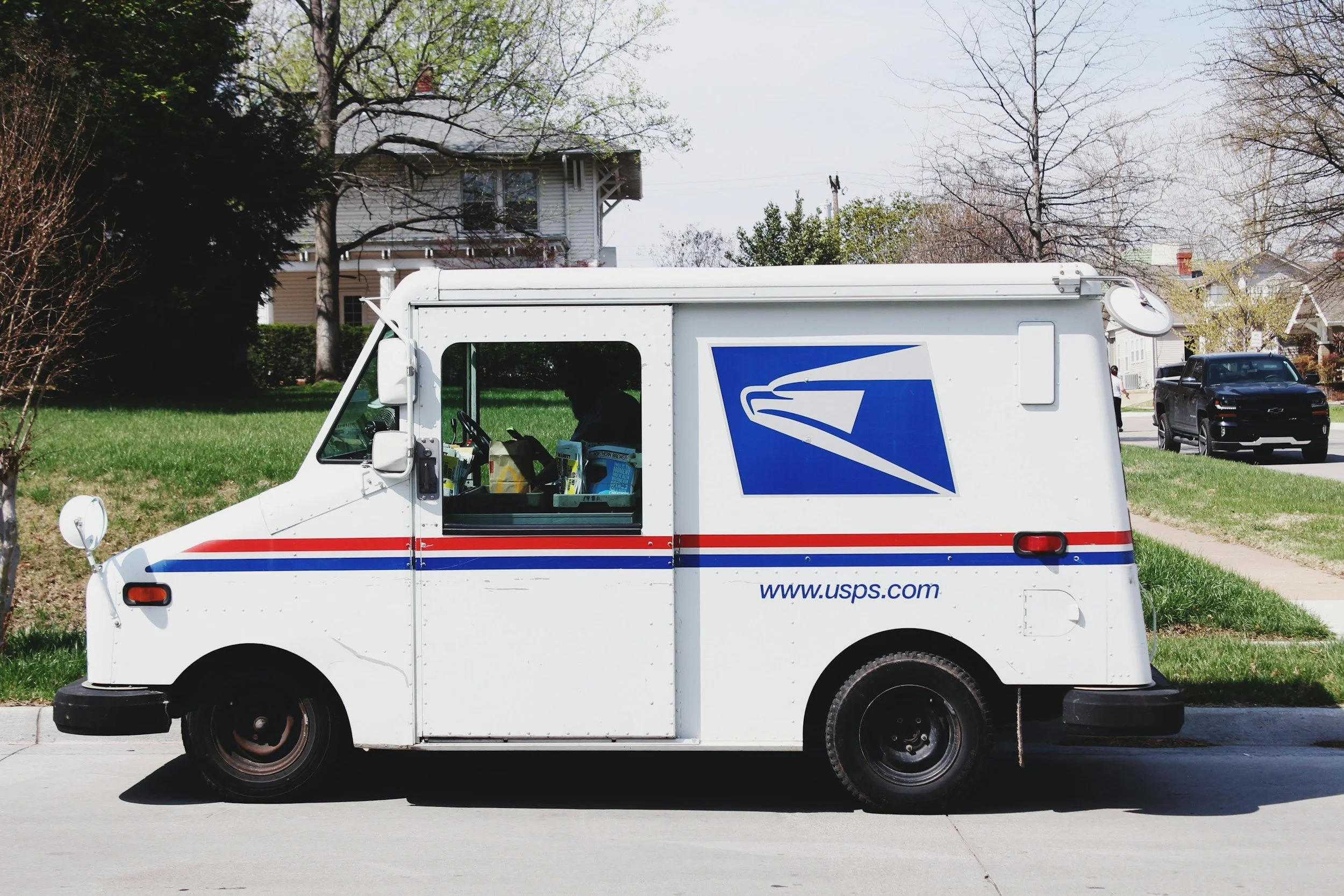
The USPS isn't just cutting costs, it's fundamentally restructuring how it operates. Through its 10-year Delivering for America plan, the Postal Service is consolidating operations by moving letter carriers from local post offices to larger Sorting & Delivery Centers. These changes are already underway and has important implications for employees' careers, benefits, and retirement planning. It appeared to improve efficiency on paper, but for the workers, it has often resulted in longer commutes, unfamiliar routes, new schedules and increasing uncertainty about future job security.
Although implementation has not met the USPS's original timeline, the restructuring has not stopped. In 2022, the Postal Service unveiled plans to consolidate up to 100,000 carrier routes into 400–500 larger Sorting & Delivery Centers. Today, with roughly half of those consolidations complete and approximately 133 facilities activated, the transformation is continuing and its impact on employees is becoming increasingly evident.
Paying for this brokenness are not only postal service employees who have had their retirement funds leveraged, but the impact of Delivering for America has consequences. USPS has been moving letter carriers out of the back of local post offices and into larger Sorting & Delivery Centers, known as S&DCs. On paper, it is an efficiency effort. For postal employees, it can mean longer commutes, unfamiliar routes, changed schedules, and growing uncertainty about the future of their jobs.
One postal worker described the change this way: “Last year, I reported to my local post office’s delivery unit, prepared my mail, ran my neighborhood carrier route, and went home. Now I drive an hour to the nearest Sorting & Delivery Center, drive an hour back to my neighborhood to deliver the same route, return to the S&DC to close out, and then drive an hour home. That adds four hours to my day. Is anyone looking at that? I used to love this job, but I don’t know how I can keep doing this.”
As USPS sinks deeper into crisis, postal workers are being asked to keep the nation’s mail moving while the system defers the very health and retirement obligations they have earned.
The USPS says this change in operations has produced more than $1 billion in savings to date, potentially generating billions more annually if fully implemented. But, an audit from the United States Postal Service Office of Inspector General found it also created $1.4 million in added overtime costs and about $19 million in additional labor expenses. This raises concerns about whether the savings are as clear as the USPS suggests.
Although postal workers' TSP accounts aren’t being raided, nor are their pensions disappearing, suspending employer contributions to the Federal Employees Retirement System (FERS) to save money isn’t a sustainable solution. While it may be saving the USPS roughly $100 million per week, or $2.5 billion in the current fiscal year, using those would-be contributions to employees’ retirement funds just to keep the lights on is only multiplying future indebtedness.
Eventually, those missed payments will have to be restored, restructured, or addressed by Congress. For postal workers, it also raises an important question: how will the agency afford to pay back both missed and future payments.
Postal workers aren’t the only ones impacted by this financial crisis. While taxpayers may not be paying USPS’ operating costs now, that doesn’t necessarily mean they won’t in the future. When a public service is legally required to serve every American address, but can’t sustain itself financially, the bill doesn’t go away. It gets pushed onto workers, customers, communities, and potentially taxpayers.
The USPS can no longer afford to be expected to operate like a business while fulfilling a public mission. Unlike commercial carriers chasing profitable routes, the Postal Service is the only carrier legally obligated to deliver to every address in America; from densely populated cities to the most remote rural communities, regardless of whether the route pays for itself.
Unlike most federal agencies, the USPS does not rely on annual taxpayer appropriations to fund its day-to-day operations. Instead, it is expected to finance the vast majority of its operations through the sale of postage, products, and services; all while fulfilling its legal obligation to deliver to every address in America. It is a unique mandate that combines the responsibilities of a public service with the financial expectations of a self-supporting enterprise.
Until the Postal Service's long-term funding model is addressed, measures such as deferring retirement contributions are temporary solutions that postpone – not solve – the underlying financial challenges. If universal mail service is a national priority, then ensuring the long-term financial stability of the institution that delivers it must be a national priority as well.
For postal employees, this isn't just another headline—it's your career, your retirement, and your family's financial future. As the Postal Service continues to evolve, the decisions you make about your federal benefits today can have a lasting impact for decades to come. Understanding how your pension, TSP, Social Security, healthcare, and insurance work together isn't just helpful—it's essential. The best time to prepare is before change leaves you with fewer options.
With the USPS announcement around how your FERS (pension) will be funded, more responsibility is shifting to you.
Here’s the reality: Your FERS pension was designed to be a foundation, but your TSP may now carry more of the weight.
Know how your contributions are invested
Understand the difference between G, F, C, S, I, and L funds
Make sure old accounts (from prior service or jobs) aren’t sitting idle
If your money is scattered, your strategy is too
This is the time to truly understand your benefits and take control of designing the future you want. Your future deserves more than guesswork.
Federal Solutions has been helping Federal Employees understand their benefits for more than 30 years.
Because your Best Decision is an Informed Decision.
Postal employees have unique retirement and benefit questions because USPS workers may be covered by FERS, CSRS, TSP, FEGLI, Social Security, and the Postal Service Health Benefits Program. These FAQs explain common benefit issues postal workers should understand before retirement, separation, early-out offers, or major workforce changes.

OPM Resources | Postal Employees
You can make changes outside of Open Season if you experience common events called Qualifying Life Events (QLEs); changes to your family life, employment changes, retiring or changing federal agencies.
If you want to make a QLE change, please call:
USPS employees: Human Resources Shared Service Center, 877-477-3273
Annuitants: Retirement Information Office, 888-767-6738
Compensationers, or if you pay premiums directly: National Finance Center, 888-451-1261
Postal workers with Health Benefits can visit OPM.gov/postal or call the Helpline at 844-451-1261, or call USPS Human Resources at 877-477-3273.

Want to talk with a Federal Solutions Expert? We offer up-to-date, OPM-aligned, honest answers for Federal Employees’ questions.
Federal Solutions Experts are the high integrity, knowledgeable consultants that Postal Employees turn to for answers to Benefits, Retirement, Paperwork and Process questions.
If you’re having trouble accessing your online Login.gov account, use the button above (24/7) to get help.
